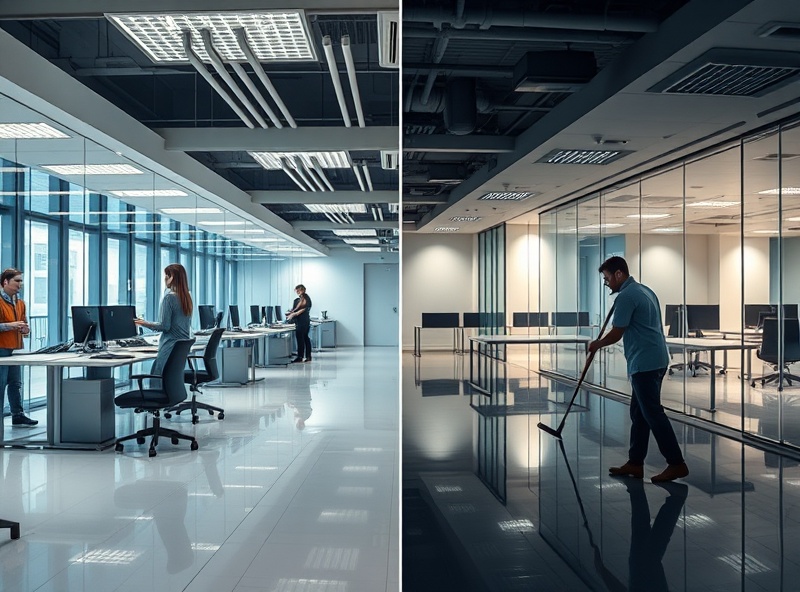
The Scheduling Question: When Should Your Office Get Cleaned?
One of the most fundamental decisions about office cleaning is timing. Should professional cleaners arrive during your business hours, after everyone leaves, or on weekends? This seemingly simple question has significant implications for operations, cost, quality, and employee experience.
The right answer depends on your business type, operations, client interactions, and priorities. Let’s examine both approaches.
After-Hours Cleaning: The Popular Choice
After-hours cleaning—typically 5 PM to midnight or later—represents the most common approach for professional offices.
Advantages of After-Hours Cleaning
Operational Freedom: Staff works without cleaning teams present:
- No disruption to normal operations
- No need to protect work materials or equipment
- No navigation around cleaning carts or processes
- Continuous workflow without interruptions
Professional Efficiency: Cleaning teams work faster without obstruction:
- Access to all spaces without obstacles
- Ability to move furniture and equipment
- No need to work around occupied desks
- Efficient, streamlined process
- Often faster completion than daytime service
Client Experience: Clients don’t encounter cleaning in progress:
- Professional image unaffected by active cleaning
- No perception of “unkempt” offices
- Modern, clean appearance during business hours
- Better client experience and professionalism
Thorough Cleaning: Unoccupied spaces enable comprehensive attention:
- Access behind and under furniture
- Complete floor treatment
- Detailed attention to all areas
- No areas skipped due to occupancy
Cost Efficiency: Professional teams work efficiently during after-hours:
- Per-facility cost often comparable to daytime despite working evenings
- Consolidated operations in multiple nearby offices
- Efficient overnight scheduling
- Competitive night-shift pricing
Challenges of After-Hours Cleaning
Building Access: Your facility must accommodate after-hours entry:
- Security systems allowing provider access
- Building management cooperation
- Key and alarm code management
- Liability for after-hours presence
Security Concerns: Some businesses hesitate with staff present when building is closed:
- Need for background checks and vetting
- Concern about proprietary information access
- Requirement for trusted, reliable providers
- Security documentation and procedures
Limited Supervision: No manager present to address issues:
- Can’t immediately address missed areas
- Communication delay for special requests
- Reliance on provider quality and accountability
- Requires clear documentation and instructions
Communication Gaps: Daytime staff can’t direct cleaning:
- Misunderstandings about requests
- Missed special cleaning needs
- Lack of immediate feedback
- Dependency on written instruction accuracy
Daytime Cleaning: The Alternative
Daytime cleaning—typically 10 AM to 2 PM—occurs while staff is present and working.
Advantages of Daytime Cleaning
Direct Communication: Immediate feedback and adjustments:
- Address missed areas immediately
- Clarify special requests in real-time
- Adjust approach based on feedback
- See results and approve completion
Management Supervision: Management can observe and direct:
- Ensure quality standards are met
- Address issues immediately
- Train or provide feedback
- Maintain control and oversight
Building Access Simplicity: No special security measures needed:
- Normal building access during business hours
- No after-hours key management
- Standard building security applies
- Simpler operational management
Schedule Flexibility: Adapt to changing needs:
- Increase or reduce frequency easily
- Adjust timing based on operations
- Special requests and modifications
- Responsive to immediate needs
Relationship Building: Cleaning team becomes known to staff:
- Familiarity and trust development
- Team continuity and relationships
- Feedback and improvement opportunities
- Personal accountability
Challenges of Daytime Cleaning
Operational Disruption: Cleaning interrupts normal workflow:
- Staff navigates around cleaning activities
- Noise and activity creates distractions
- Access issues to needed areas
- Concentration interruption during focused work
Slower Service: Obstacles and interruptions slow progress:
- Must work around occupied spaces
- Cannot move furniture or reposition items
- Additional time needed due to obstacles
- Less efficient process
Client Perception: Visible cleaning creates impression:
- Clients may see cleaning in progress
- Suggests “constant need” to clean
- Potential perception of uncleanliness requiring daytime maintenance
- Professional image slightly affected
Employee Annoyance: Staff may find daytime cleaning intrusive:
- Disruption to workflow and concentration
- Noise and movement distractions
- Privacy concerns in work spaces
- Negative impact on satisfaction
Higher Cost: Daytime service often costs more:
- Same-time staffing requirements
- Longer completion times
- Less efficient processes
- Premium for daytime availability
Hybrid Approaches: Best of Both Worlds
Many businesses use combination approaches optimizing timing by area:
Specialized Timing by Zone
High-Traffic Areas: After-hours deep cleaning
- Reception, conference rooms, client areas
- Furniture moved, detailed attention
- Full professional approach
- Done when space is empty
Daily Touch-Ups: Quick daytime cleaning
- High-touch surface disinfection
- Restroom maintenance
- Trash removal and organization
- 15-30 minute quick clean by single person
Private Offices: Weekly or bi-weekly cleaning
- Either after-hours detailed or daytime quick clean
- Based on cleanliness needs
- May use daytime for convenience
- Supervision possible if daytime
Specialized Services: Monthly or quarterly
- Deep carpet cleaning, window washing, floor waxing
- Scheduled at convenient times
- Often after-hours for extensive work
- Comprehensive, undisturbed service
Example Hybrid Schedule
Daily After-Hours: 7 PM - 9 PM (2 staff)
- Complete building deep clean
- All surfaces, floors, restrooms
- Furniture movement and detail work
Daily Daytime: 12 PM - 12:30 PM (1 staff)
- Restroom spot-clean and restock
- High-touch surface disinfection
- Trash replacement
- Visible appearance maintenance
Monthly After-Hours: Special services rotating
- Deep carpet cleaning
- Professional window washing
- Floor waxing or specialized treatment
- One Saturday per month
Cost of Hybrid Approach
Combining approaches appears to cost more (paying for two service levels) but often:
- Provides superior cleanliness
- Costs comparable to high-quality after-hours-only services
- Delivers employee satisfaction from clean daytime environment
- Ensures client-facing perfection during business hours
Industry-Specific Considerations
Law Offices and Professional Services
Recommendation: After-hours cleaning
- Confidentiality and document sensitivity
- Professional image paramount
- Limited client tolerance for visible cleaning
- Access to all document areas necessary
Medical and Dental Offices
Recommendation: Hybrid approach
- After-hours deep cleaning (clinical areas)
- Daytime restroom and surface spot-cleaning
- Patient safety and sanitation priority
- Infection control between patients
Corporate Offices
Recommendation: After-hours cleaning
- Operational continuity important
- Employee productivity priority
- Client meeting areas must be pristine
- Efficient unobstructed cleaning preferred
Retail and Customer-Facing
Recommendation: Multiple daily touch-ups
- Customer perception throughout day
- High-traffic requiring frequent maintenance
- Evening deep clean essential
- Throughout-day maintenance critical
Making Your Decision
Assess These Factors:
- Your Industry Norms: What do comparable businesses do?
- Building Access: Can you accommodate after-hours entry?
- Staff Preferences: What disruption do employees prefer?
- Client Interaction: How important is daytime appearance?
- Budget Constraints: What can you afford?
- Supervision Needs: Can you oversee daytime cleaning?
- Operational Requirements: What best supports business operations?
Questions to Ask Yourself:
- Would visible daytime cleaning harm professional image?
- Can your building accommodate after-hours entry securely?
- Do staff prefer no disruption or prefer supervision?
- Do clients ever visit during peak hours?
- What’s your tolerance for coordination complexity?
The Professional Recommendation
For most professional offices, after-hours cleaning offers optimal value:
- Maintains professional appearance during business hours
- Doesn’t disrupt operations or employee productivity
- Allows thorough, efficient cleaning
- Provides modern, always-clean environment
- Costs comparable to or less than daytime service
However, hybrid approaches work well for offices prioritizing:
- Frequent throughout-day freshness
- Direct staff supervision
- Daytime touch-ups and maintenance
- Employee preference for visible cleanliness efforts
Finding Your Balance
The right cleaning schedule aligns with your business operations, building capabilities, budget, and priorities. Most businesses find success with:
- Primary: After-hours professional deep cleaning (efficiency + quality)
- Secondary: Daytime quick touch-ups if budget allows (throughout-day freshness)
- Special: Monthly or quarterly specialized services (comprehensive care)
This combination delivers professional standards while accommodating operational needs and budget constraints.
Ready to schedule cleaning that works perfectly for your operations? Apex Cleaning Services offers flexible scheduling—after-hours, daytime, hybrid, or customized—designed around your specific business needs. Contact us to discuss the approach that’s ideal for your office.